Iron Removal Filter System in Porur: Why Your Borewell Water Test Comes First
Why Test Your Water Before Choosing an Iron Removal Filter System?
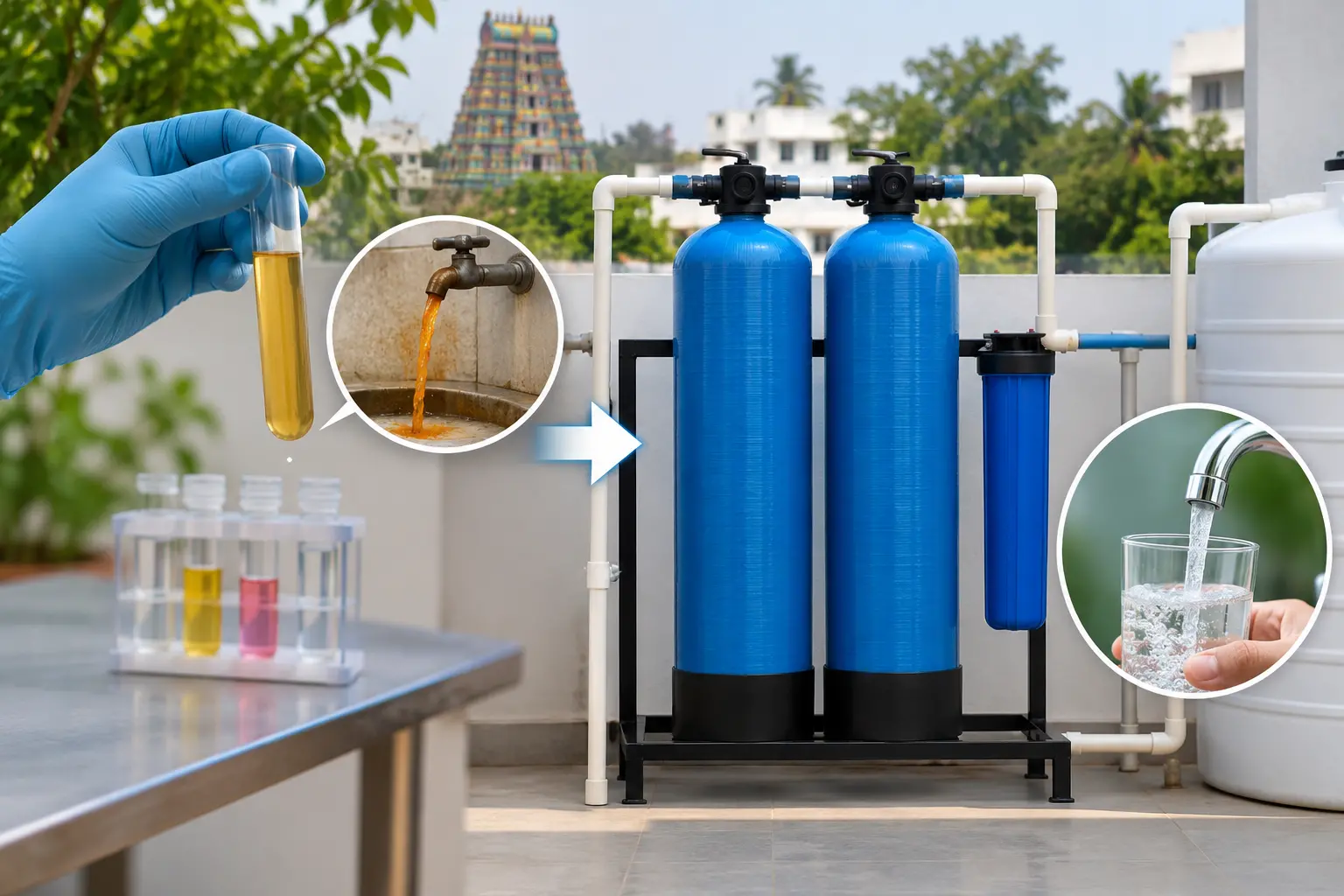
Choosing an iron removal filter system for your Porur home? Before you compare systems, one step decides everything: testing your own borewell water.
The short answer: An iron removal filter system is sized from a water analysis of your own borewell water: iron content in mg/L, pH, and flow requirement. Testing first means the system matches your water, not someone else’s.
Why test before you choose a system?
- Every Nollet RO installation begins with a water analysis.
- The on-site test covers iron, pH, hardness, and TDS.
- The system is sized and configured based on your iron content (mg/L), pH, and flow requirement.
- Nollet RO has analysed 9,000+ water samples, and every project starts with lab-tested data so the solution fits the source water.
How Much Iron Is Too Much?
- IS 10500:2012 sets the acceptable limit for iron at 0.3 mg/L.
- The relaxed limit is 1.0 mg/L, where no alternative source is available.
- For context, bore water samples in Kundrathur often show 2–5 mg/L. That is an example from Nollet RO’s Kundrathur work, not a Porur reading.
What Does Excess Iron Do to Your Home?
- Reddish-brown stains on tiles, sinks, sanitary ware and laundry.
- A metallic, bitter taste and an earthy odour.
- Iron deposits that corrode pipes and clog valves, affecting washing machines, water heaters and overhead tanks.
- Clogged RO membranes, when iron-laden water goes straight into an RO unit.
- Over time, consistently drinking water with very high iron concentrations can put stress on internal organs.
Wondering why iron turns water yellow or brown? Read our explainer on yellow and brown borewell water.
How Big a System Do You Need?
Capacity follows your flow requirement:
- Compact domestic units handle 300–500 LPH.
- Community systems for apartments, gated communities, schools, and factories handle 5,000–50,000 LPH.
- A household using 500–1,000 LPH typically needs one filter vessel of about 12–16 inches in diameter and 4–5 feet in height.
- Larger set-ups may use multiple vessels in parallel.
- Nollet RO assesses your available space during the site visit.
How Does the Iron Removal Filter Work?
- Oxidation: Dissolved iron is converted into insoluble particles through aeration or chemical oxidants.
- Filtration: A bed of greensand, activated manganese dioxide, and supporting gravel captures the particles.
- Backwash: A timer-controlled or manual backwash flushes the trapped iron out of the media.
- Both dissolved (ferrous) and particulate (ferric) iron are treated.
Do You Still Need One If You Have an RO Purifier?
- An RO system can partially reduce iron, but high iron levels will quickly damage the membrane.
- A regular sediment or activated carbon filter is not designed to handle dissolved iron.
- An iron removal system is a dedicated pre-treatment stage before RO or UV.
For the full picture, read Can an RO Plant Run on Borewell Water Without Pretreatment?
What Changes After Installation?
- Clear, odour-free water for drinking, cooking, bathing and household use.
- Protection from rust stains on tiles, taps, bathtubs and white laundry.
- Protection for your washing machine and water heater from iron build-up.
- A primary treatment stage that protects RO membranes downstream.
- Low power consumption, infrequent media replacement and simple backwash cycles.
- Nollet RO states its systems remove up to 99% of dissolved iron.
What Upkeep Should You Expect?
- Backwash every 2–7 days, depending on iron load and daily usage, taking about 15–20 minutes.
- Filter media typically lasts 3–5 years before replenishing.
- Nollet RO’s Annual Maintenance Contract (AMC) covers scheduled backwash checks, media inspection, and performance monitoring.
If your filter loses pressure or clogs, see Why Does Your Water Filter Get Blocked Frequently?
How Nollet RO Installs Your System
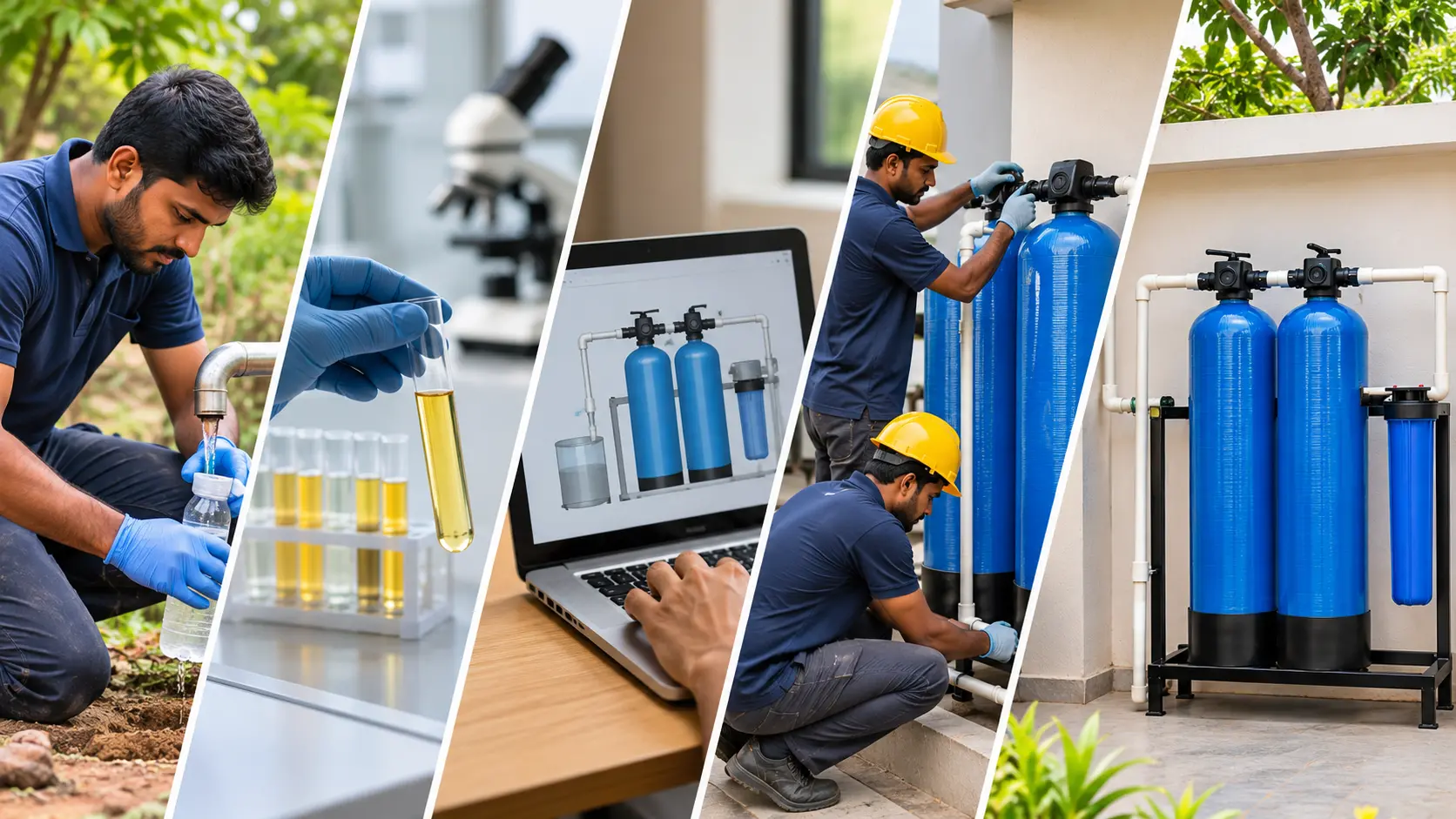
- Water analysis: On-site testing for iron, pH, hardness, and TDS.
- System design: Filter sizing based on your flow rate and iron data.
- Installation: Professional fitting with minimal disruption to your water supply.
- Post-service support: AMC and maintenance plans for long-term performance.
Our Iron Removal Work and Customer Feedback
- Nollet RO has installed an Automatic Iron Removal Plant at Nirmal-Admin in Thiruverkadu.
- A combined 2,000 LPH RO plant and catalytic iron removal system serves a customer in T. Nagar, West Mambalam.
- A Valasaravakkam customer with an iron removal plant says they have travelled with the Nollet RO team for six years and are fully satisfied with the quality and service.
Ready to see what a system involves? Visit our iron removal filter system in Porur page, or read our guide on choosing an iron removal system for borewell water.
Frequently Asked Questions (FAQs)
1. What is the BIS acceptable limit for iron in drinking water?
IS 10500:2012 sets 0.3 mg/L as the acceptable limit for iron, with a relaxed limit of 1.0 mg/L where no alternative source is available.
2. How is an iron removal system sized for a home?
Nollet RO sizes each system from a water analysis covering iron content in mg/L, pH, and flow requirement.
3. Is an iron removal system different from a regular water filter or RO system?
Yes. A regular sediment or activated carbon filter is not designed for dissolved iron, and high iron can quickly damage an RO membrane. An iron removal system is a dedicated pre-treatment solution.
4. How often does an iron removal filter need backwashing?
Every 2–7 days, depending on iron load and daily usage. Backwashing takes about 15–20 minutes and can be manual or automatic through a timer-controlled valve.
Test Your Water First
Book a free water test with Nollet RO and get an iron removal system sized to your own borewell water.
Call +91 96770 50885 | Book your free test
Our team is available Mon–Sat, 9 am–7 pm IST.