
Why Are There White Stains on Your Utensils and Bathroom Tiles? Signs of Hard Water in Karambakkam
Published:August:10,2026 8Min Read
Why Are There White Stains on Your Utensils and Bathroom Tiles?
You wash your steel utensils, let them dry, and instead of a clean shine, you see a chalky white film. Your bathroom tiles have the same problem — a dull, crusty residue near the taps and shower area that scrubbing barely removes. If this sounds familiar and you live in Karambakkam, you’re not dealing with a cleaning problem. You’re dealing with hard water.
This is one of the most common household issues in areas with groundwater-dependent supply, and most people spend months trying different soaps and cleaning hacks before realizing the water itself is the cause.
What Exactly Causes These White Stains?
The white residue you’re seeing is called limescale — a buildup of calcium carbonate and magnesium left behind after hard water evaporates. It’s not dirt, and no amount of extra scrubbing or stronger soap fully removes it, because the source is mineral content in the water itself, not surface grime.
Why This Happens More in Karambakkam
Areas that depend heavily on borewell or groundwater supply, like many parts of Karambakkam, tend to have higher mineral content compared to areas on treated municipal supply lines. Groundwater passes through rock and soil rich in calcium and magnesium deposits, picking up hardness along the way before it reaches your taps.
How to Confirm It’s Actually Hard Water (Not a Cleaning Issue)
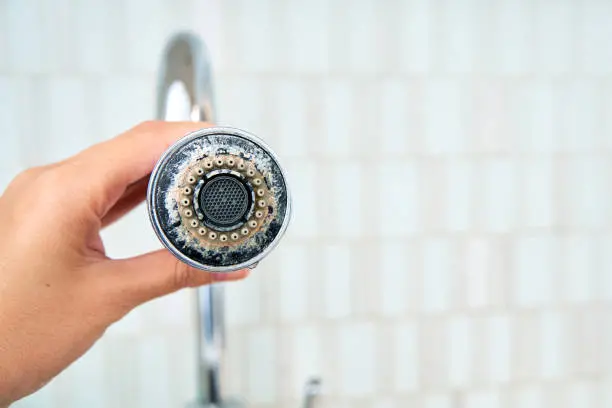
Before assuming it’s hard water, here are simple signs to check for:
- Utensils dry with a cloudy film, even right after washing with soap
- Soap doesn’t lather easily, and you need more of it to get the same clean feel
- Bathroom tiles and shower glass develop a rough, white crust over weeks
- Clothes feel stiff after washing and drying, even with fabric softener
- Appliances like kettles and water heaters show scale buildup faster than expected
If two or more of these sound familiar, hard water is very likely the cause — not your cleaning routine.
How Do I Know for Sure If It’s Hard Water?
If you’re seeing two or more of the signs above, it’s worth getting your water tested rather than guessing. A quick water hardness check from a water treatment provider will confirm the exact hardness level and whether a softener is the right fix for your home.
Why You Shouldn’t Ignore Hard Water Stains
Hard water isn’t just a cosmetic issue. Left untreated, it can:
- Reduce the lifespan of geysers, washing machines, and RO systems due to scale buildup
- Increase soap and detergent usage, since hard water resists lathering
- Leave skin feeling dry and hair feeling rough after bathing
- Clog pipes and fittings over time, leading to reduced water flow
Does Hard Water Affect Drinking Water Safety Too?
Hard water itself isn’t usually a direct health hazard in the way contaminated water is, but it does affect taste, and the same mineral buildup that stains tiles can also affect the performance of your RO or purification system if left unaddressed.
This is why many homes with hard water pair a water softener with their existing RO setup — one addresses hardness, the other handles purification.
What Actually Fixes Hard Water Stains
Temporary Fixes (Manage the Symptom)
- Wiping tiles and utensils dry immediately after use
- Using vinegar-based cleaners to dissolve existing limescale
- Switching to specialized hard-water soaps or detergents
These help reduce visible staining but don’t address the root cause — your water will keep leaving deposits as long as it stays hard.
The Long-Term Fix: A Water Softener
A water softener works by using ion-exchange resin to replace hardness-causing calcium and magnesium ions with sodium ions, before the water reaches your taps.
This means the water reaching your utensils, tiles, and appliances is no longer capable of leaving mineral deposits behind.
Frequently Asked Questions
Hard water is generally not harmful to drink, but the same minerals causing stains can affect taste and reduce the efficiency of appliances and RO systems over time.
Not fully. Most RO purifiers focus on removing contaminants and improving taste, not specifically on removing hardness-causing minerals. A water softener is designed for that job.
Most households notice a visible difference within a week or two — utensils dry cleaner, tiles stop developing new scale, and soap lathers more easily.
Both options exist. A point-of-use softener can target the kitchen alone, while a whole-house system treats water at the main supply line, covering bathrooms and appliances too.
Stop Treating the Symptom, Fix the Source
Scrubbing tiles harder or switching soaps might reduce the stains temporarily, but if you’re in Karambakkam and dealing with recurring white residue on utensils and bathroom surfaces, the real fix starts with addressing water hardness at the source.
Nollet RO has been working in the water treatment industry in Chennai for years, offering water softener solutions designed for areas with high groundwater hardness, including Karambakkam and surrounding localities.
Not sure if your water hardness needs a softener, a conditioner, or both? Contact Nollet RO for a water hardness check and the right recommendation for your home.