
What Causes Muddy Water to Enter Household Water Supply Systems During Heavy Rainfall?
What Causes Muddy Water to Enter Household Water Supply Systems During Heavy Rainfall?
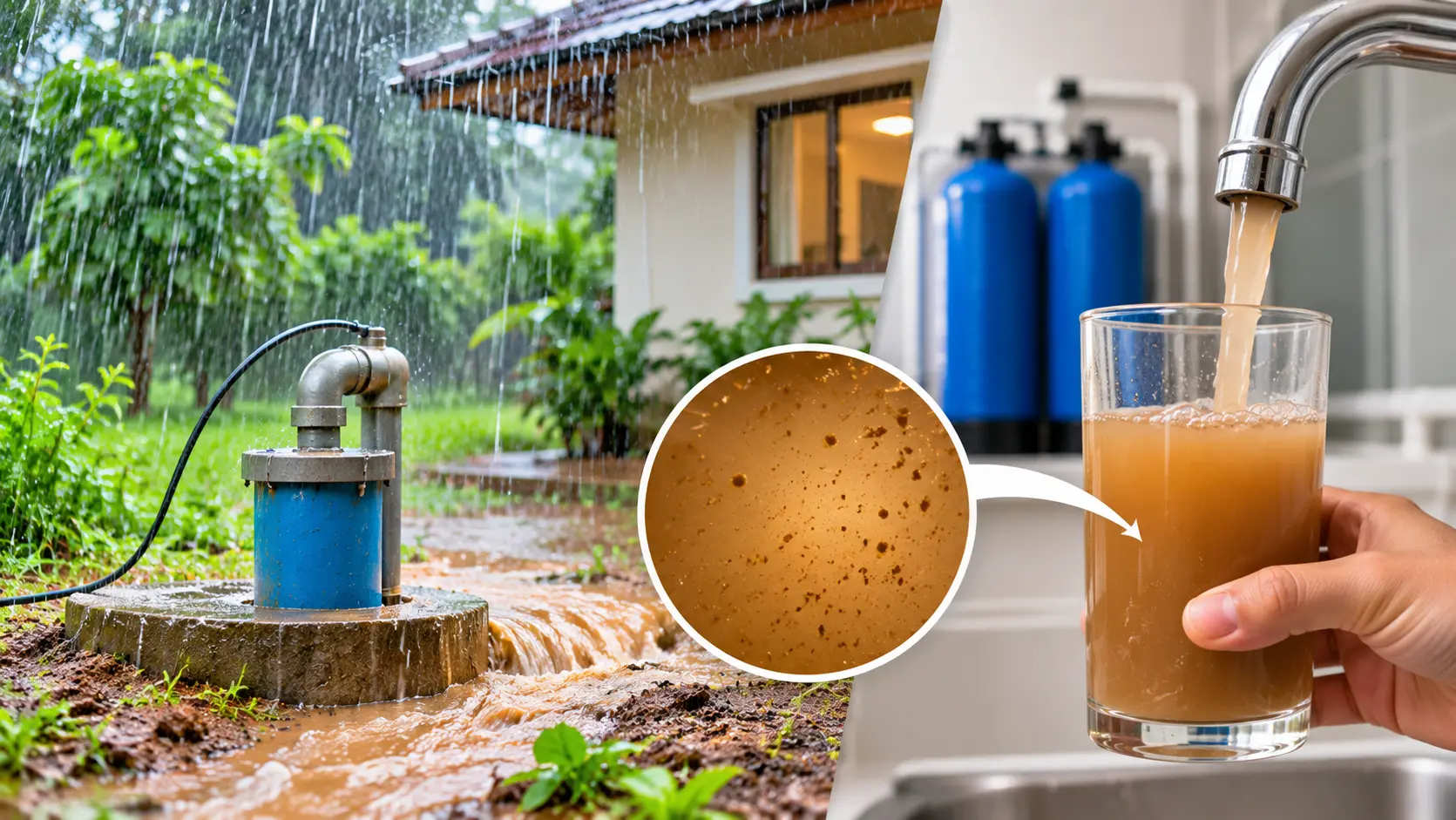
Heavy rainfall can change the appearance of water supplied to homes, particularly when households depend on borewell water. Water that normally appears clear may suddenly become muddy or contain visible suspended particles.
When this happens, homeowners may wonder whether rainwater has entered the borewell, whether the water source has been affected, or whether the existing filtration system needs attention.
Understanding the possible causes is important before selecting a water treatment solution. Muddy water should not automatically be attributed to rainfall alone, as the actual cause depends on the borewell condition and water source.
1. How Can Heavy Rainfall Affect Borewell Water?
During heavy rainfall, water flows across the ground and can carry soil, silt, and other suspended particles.
Some rainfall infiltrates the ground and contributes to groundwater recharge, while some flows across the surface as runoff.
If a borewell is not adequately protected, surface water may find a pathway into the borewell and affect the extracted water.
Possible reasons include:
- Poorly protected borewell openings.
- Inadequate sealing around the borewell casing.
- Surface water entering through gaps around the casing.
- Changes in groundwater conditions following heavy rainfall.
The condition and construction of the borewell play an important role in determining whether surface water can enter the groundwater source.
2. What Are the Possible Reasons for Muddy Water During Rainy Weather?
Not every muddy-water problem has the same cause. Homeowners should consider the following possibilities.
| Possible Cause | How It Can Affect Water |
|---|---|
| Surface Water Runoff | Rainwater flowing over the ground can carry soil and sediment. |
| Inadequate Borewell Casing Protection | Unwanted surface water may enter through unsealed spaces around the casing. |
| Poor Borewell Construction | Improper protection against upper surface formations can allow unwanted water entry. |
| Increased Suspended Particles | Soil, clay and other particles can increase water turbidity. |
A water-quality assessment is necessary to understand the actual condition rather than selecting a filter based only on appearance.
3. Why Should Homeowners Investigate the Borewell Before Choosing a Filter?
Installing a filtration system without understanding the source of the problem may not address the actual requirement.
Before selecting a treatment system, homeowners should:
- Observe when the water becomes muddy.
- Check whether visible particles are present.
- Compare the water’s appearance before and after heavy rainfall.
- Inspect the borewell opening and surrounding protection.
- Arrange water-quality testing to understand the water characteristics.
These checks help identify whether the concern requires attention to the borewell structure, water quality, or filtration arrangement.
4. Which Water Treatment Systems Should Be Evaluated?
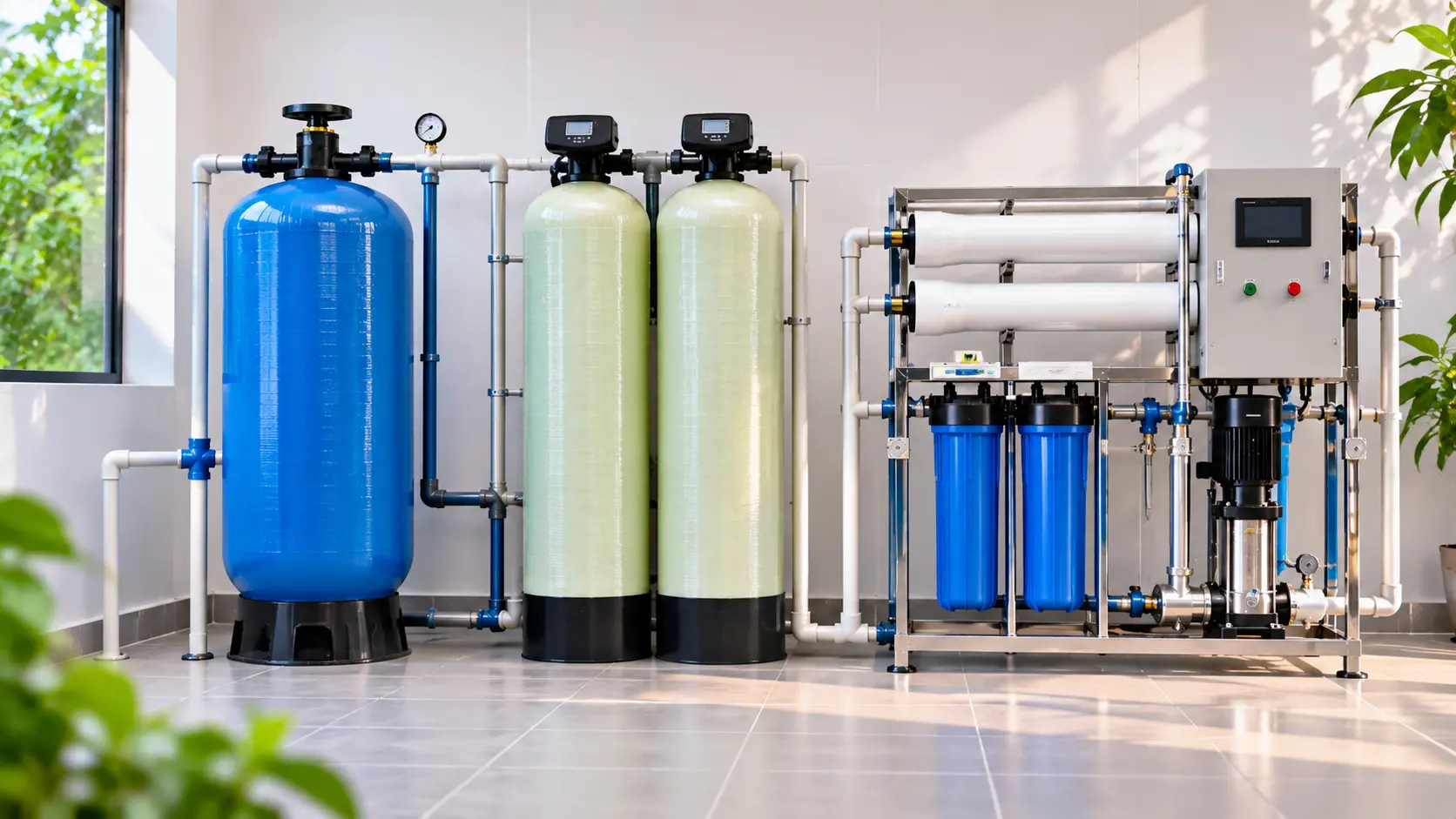
The appropriate filtration system depends on the water-quality assessment and the type of impurities identified.
| Treatment System | Application |
|---|---|
| Pressure Sand Filter | Helps remove suspended particles and reduce turbidity. |
| Iron Removal Filter | Addresses excess iron in water. |
| Reverse Osmosis Plant | Reduces dissolved solids when required by the water characteristics. |
A pressure sand filter may be relevant when suspended particles and turbidity are identified as treatment concerns.
Explore Nollet RO’s Pressure Sand Filters for filtration requirements.
For water containing excess iron, explore Iron Removal Filters .
When dissolved-solids reduction is required, evaluate the appropriate Reverse Osmosis Plant .
Each system serves a different purpose. The correct selection should depend on the actual water test results.
5. Why Is Water Quality Testing Important After Heavy Rainfall?
Water appearance alone cannot confirm whether the problem is caused by suspended particles, iron, or other water-quality changes.
Testing helps identify the relevant water characteristics before choosing treatment equipment.
Nollet RO provides water-quality assessment, system design, installation, and maintenance support for residential and commercial water treatment requirements.
Its water analysis process includes:
- Iron testing.
- pH testing.
- Hardness testing.
- Total Dissolved Solids (TDS) testing.
The results help determine which treatment requirements need to be considered.
Muddy water during heavy rainfall should not be ignored or treated with a randomly selected filtration system. Understanding the borewell condition and identifying the actual water-quality issue are important first steps.
Nollet RO provides water treatment solutions, including pressure sand filters, iron removal systems, and RO plants, based on water quality and application requirements.
Experiencing muddy borewell water during the rainy season?
Book a free on-site water hardness test and discuss your household water treatment requirements with Nollet RO.
Call: +91 96770 50885