
When Should an Existing RO Plant Be Serviced, Cleaned or Upgraded?
RO Plant Service Guide | 8 Min Read
When Should an Existing RO Plant Be Serviced, Cleaned or Upgraded?
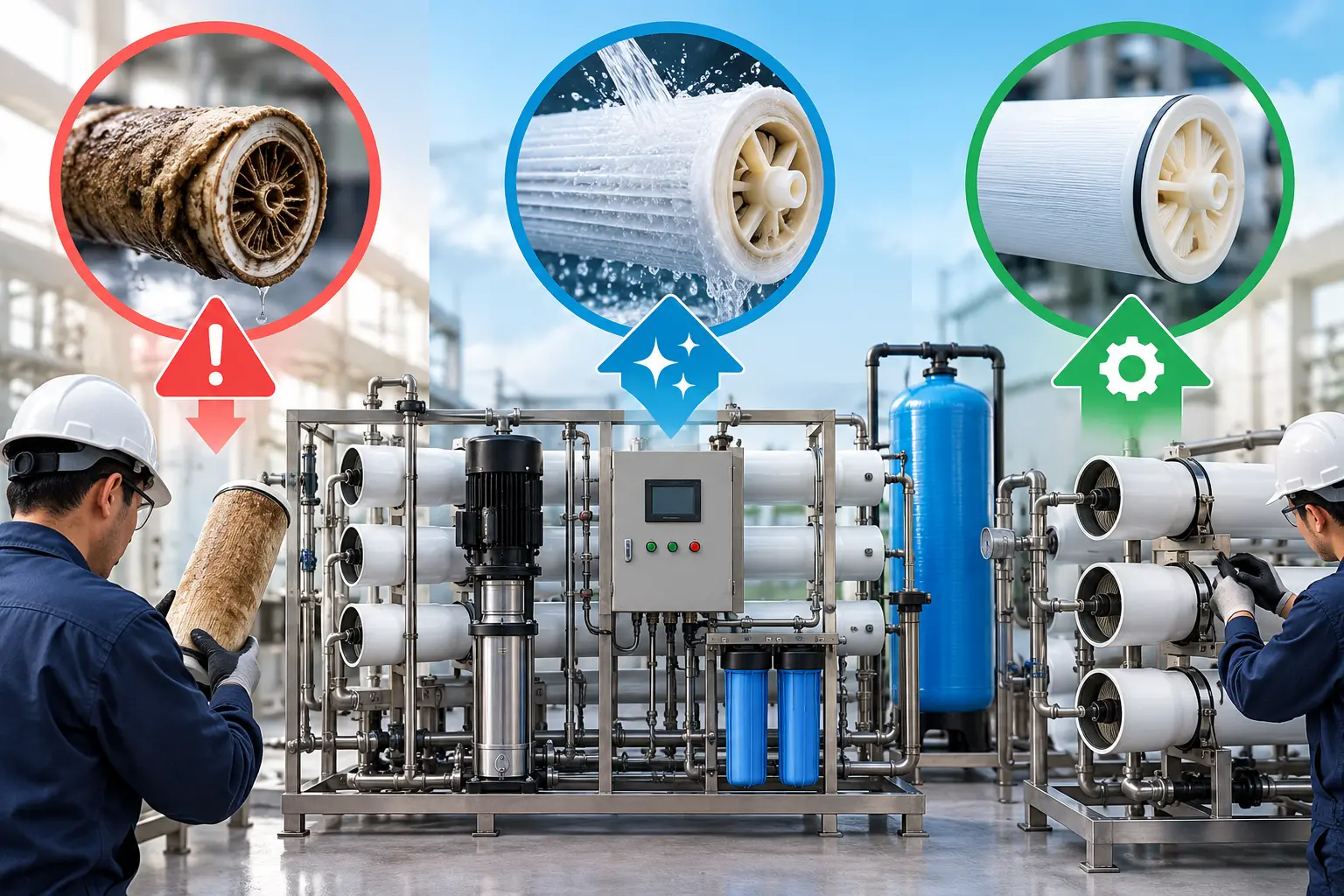
An industrial or commercial reverse osmosis (RO) plant needs appropriate maintenance to support consistent water quality and reliable operation. However, when performance changes, it is not always clear whether the system needs routine servicing, membrane cleaning, troubleshooting or an upgrade.
The right decision depends on the plant’s operating condition, water-quality readings, maintenance history and original design. Understanding the differences between these service options helps facility managers investigate problems before choosing the next step.
Why Does an Existing RO Plant Need Technical Attention?
RO plants operate by passing feed water through a semipermeable membrane to reduce dissolved substances. Pre-treatment components, pumps, filters and control systems also contribute to overall performance.
Over time, operating conditions and component condition may change. Common reasons to arrange an inspection include:
- A noticeable reduction in treated-water output.
- Changes in feed-water or treated-water TDS readings.
- Repeated equipment faults or operating interruptions.
- Accumulated deposits or suspected membrane fouling.
- A change in water demand or the facility’s treatment requirements.
- Recurring maintenance issues that need further investigation.
These signs do not automatically mean the membrane or the entire plant must be replaced. A technical assessment helps identify the appropriate response.
Should You Service, Clean or Upgrade Your RO Plant?
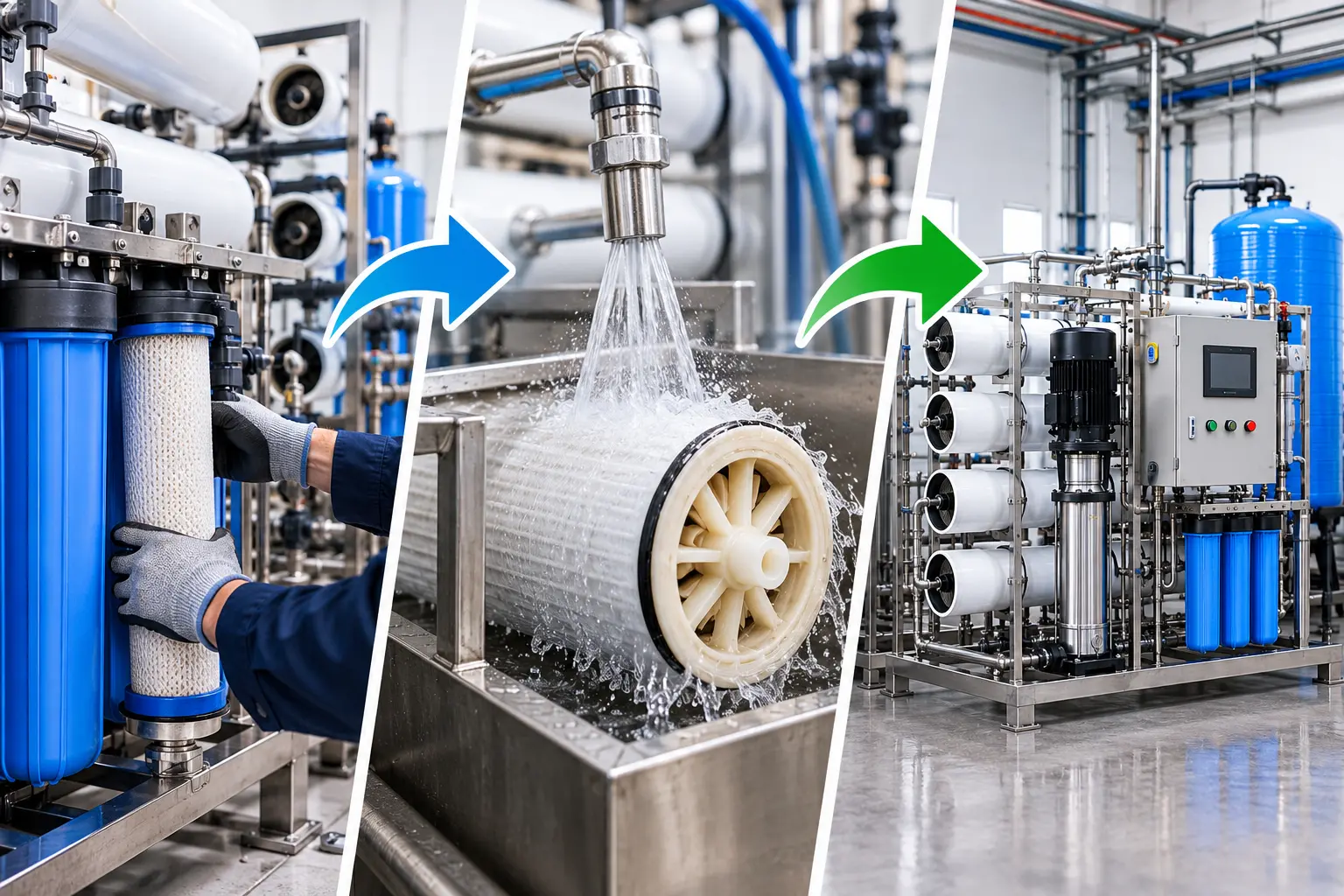
Each option addresses a different requirement. The correct choice should follow an inspection rather than an assumption.
| Service Option | When It May Be Appropriate | Main Purpose |
|---|---|---|
| Routine Maintenance | Scheduled inspection or preventive upkeep is due. | Check components and identify developing issues. |
| Membrane Cleaning (CIP) | Inspection indicates that accumulated fouling or deposits need cleaning. | Remove suitable deposits from RO membranes. |
| Repair and Troubleshooting | The system has a fault, interruption or unexpected performance change. | Investigate the cause and determine corrective action. |
| Plant Upgrade or Retrofitting | Existing equipment or configuration needs reassessment against current requirements. | Modify or modernise the existing system. |
| Automation Improvements | Control or monitoring requirements need attention. | Improve how the treatment system is controlled and monitored. |
Nollet RO lists RO plant repair and troubleshooting, membrane cleaning (CIP), annual maintenance contracts, plant upgradation and automation among its water-treatment services.
Explore Nollet RO’s water-treatment solutions to learn more about its service capabilities.
1. When Should You Arrange Routine RO Plant Maintenance?
Preventive maintenance helps operators review system condition before a minor issue develops into a more disruptive problem.
During a service assessment, relevant checks may include:
- Inspecting pre-filters, filter housings and other accessible components.
- Reviewing feed-water and treated-water TDS readings.
- Checking output flow and available operating records.
- Reviewing pump, valve and control-system condition.
- Examining previous service reports and recurring faults.
The exact maintenance scope and frequency depend on the system configuration, water quality, usage and manufacturer recommendations. A suitable maintenance plan should be based on these factors rather than applying the same schedule to every plant.
2. When Is RO Membrane Cleaning Necessary?
Reverse osmosis membranes can accumulate deposits or experience fouling during operation. Cleaning may be appropriate when technical assessment indicates that deposits are affecting membrane performance and the cleaning method is suitable for the membrane and contaminant involved.
Before cleaning is undertaken, the service team should consider:
- Changes in permeate flow and operating pressure.
- Available feed-water and treated-water quality records.
- Previous cleaning and maintenance history.
- The nature of the suspected deposits.
- The membrane manufacturer’s cleaning requirements.
Cleaning should not be treated as an automatic solution to every RO problem. If the underlying cause is elsewhere in the system, additional investigation may be necessary.
Read more about RO membrane fouling, its causes and prevention .
3. When Does an RO Plant Need Troubleshooting or Repair?
Troubleshooting is appropriate when the system behaves differently from its expected operating condition or develops a fault.
| Observed Concern | Information to Review |
|---|---|
| Reduced treated-water output | Flow readings, pressure records and filter condition. |
| Changed treated-water TDS | Feed-water readings, output measurements and membrane performance. |
| Repeated operating interruptions | Alarm history, pump condition and control-system records. |
| Recurring maintenance issues | Previous service reports and repeated fault patterns. |
These observations help narrow the investigation but do not confirm a specific fault on their own. Avoid adjusting operating settings or replacing major components without suitable technical assessment.
For service enquiries in the western Chennai area, visit Nollet RO’s RO plant service page in Kundrathur .
4. When Should You Consider an RO Plant Upgrade?
An upgrade may be worth assessing when the existing configuration no longer matches the facility’s requirements or when repeated operational concerns call for a broader review.
Consider discussing an upgrade if:
- The facility’s treated-water demand has changed.
- The existing system needs modifications to its treatment configuration.
- Automation or monitoring requirements have evolved.
- Repeated issues require an evaluation of the overall system.
- The plant needs to be reassessed against current water-quality and operational requirements.
An upgrade is not automatically better than repairing or maintaining an existing plant. The decision should consider water analysis, system condition, capacity requirements, site conditions and the proposed scope of work.
For commercial applications, explore Nollet RO’s commercial RO plant solutions .
What Information Should You Share Before Requesting RO Plant Service?
To help the technical team understand your requirements, prepare the following information where available:
- Type of RO plant and its intended application.
- Source of feed water.
- Recent feed-water and treated-water TDS readings.
- Description of the performance concern.
- Previous service or membrane-cleaning records.
- Any changes in water demand or operating conditions.
These details support a more focused technical discussion. The final service recommendation should follow an appropriate inspection and assessment.
Get Technical Support for Your Existing RO Plant
Whether your system needs routine maintenance, membrane cleaning, troubleshooting or an upgrade, the first step is to understand its actual condition.
Nollet RO provides water-treatment services including RO plant maintenance, repair and troubleshooting, membrane cleaning, annual maintenance contracts, and plant upgradation and automation.
Contact Nollet RO to discuss your existing system and determine the appropriate next step.
Speak with Nollet RO about your plant’s operating condition, maintenance requirements and potential upgrade options.
Call Nollet RO: +91 96770 50885