Borewell Water After Heavy Rain: What Should Chennai Homeowners Check First?
Borewell Water After Heavy Rain: What Should Chennai Homeowners Check First?
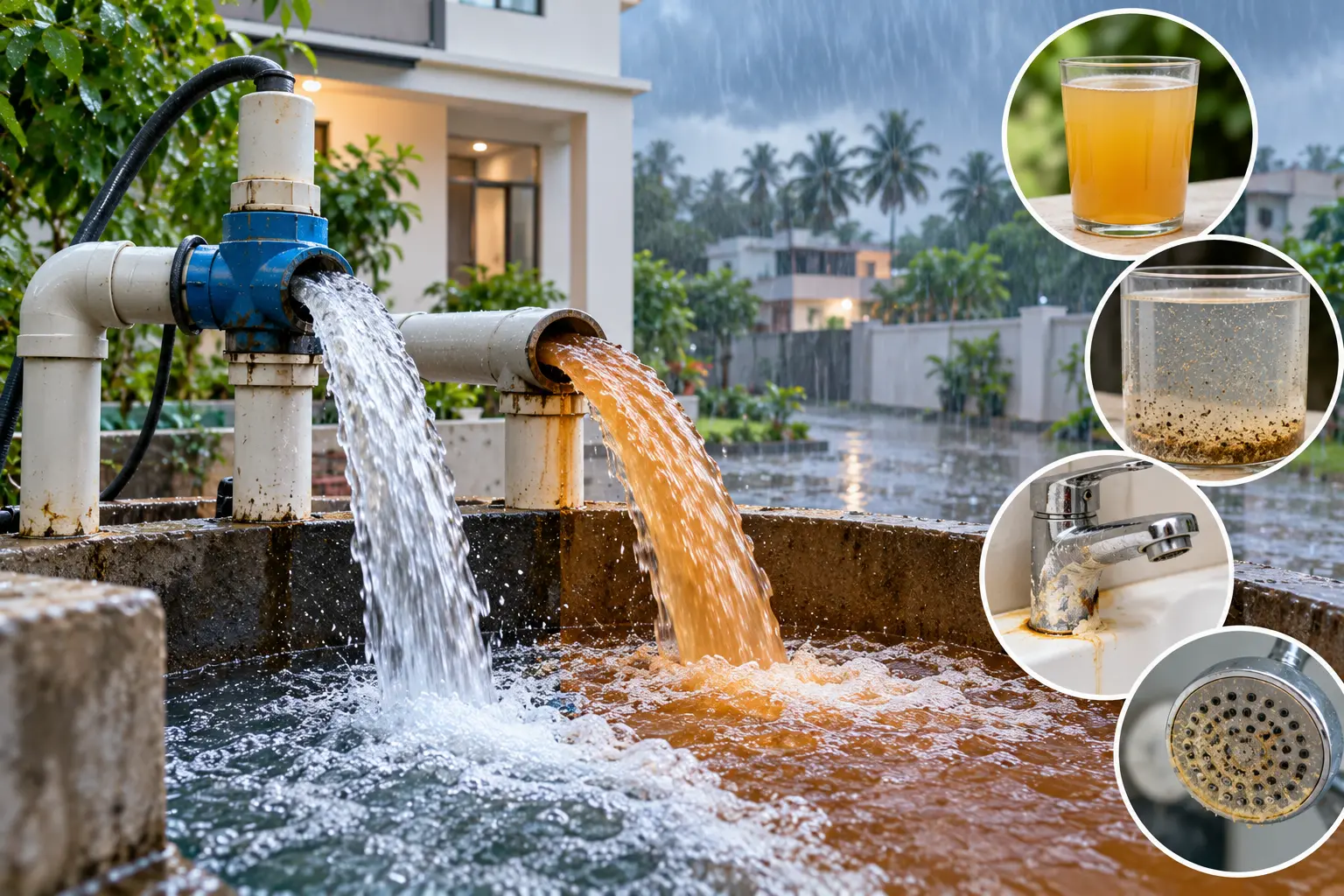
When borewell water looks different after heavy rain, the first question should not be which filter to buy. It should be which water-quality parameters to check.
Colour changes, visible particles and scale formation can point towards different water-treatment requirements. However, appearance alone cannot establish the cause. Nollet RO offers water quality testing, system design and installation services to help identify an appropriate treatment solution.
For homeowners in Chennai and surrounding areas, understanding the water before selecting equipment is a practical starting point.
1. What Should You Observe When Borewell Water Changes?
Before contacting a water treatment specialist, identify what has changed in your water supply.
Pay attention to these observations:
- Water colour: Has the water developed a yellowish or reddish appearance?
- Visible particles: Are suspended particles present in the collected water?
- Scale formation: Are chalky deposits appearing on taps or bathroom surfaces?
- Existing equipment: Is a water softener, iron removal filter or RO system already installed?
These observations help describe the problem, but they do not confirm its cause. A change in appearance should not automatically be attributed to rainfall or excess iron.
The next step is to assess the relevant water-quality parameters.
2. Which Water Parameters Should You Check?
Nollet RO’s water analysis process includes testing for iron, pH, hardness and total dissolved solids (TDS). Each parameter provides different information about the water.
| Parameter | Why It Matters |
|---|---|
| Iron | Helps assess whether iron removal treatment is relevant. |
| pH | Indicates the water’s acidity or alkalinity. |
| Hardness | Helps determine whether water softening is required. |
| TDS | Measures the total dissolved solids present in the water. |
The appropriate assessment depends on the observed issue, water source and intended application.
For example, yellow or reddish staining may warrant checking iron levels, while chalky deposits may make hardness testing relevant. Neither observation replaces a water test.
3. How Do Test Results Help You Select a Treatment System?
Choosing equipment before understanding the water can lead to a mismatch between the treatment system and the actual requirement. Nollet RO provides several categories of water treatment equipment.
Iron Removal Systems
These systems are designed to address excess iron in water. If testing identifies an iron-related issue, the system can be selected according to the measured water characteristics and required flow rate.
Read more: Why Your Borewell Water Turns Yellow or Brown and How an Iron Removal System Fixes It .
Water Softeners
Water softeners address hardness associated with calcium and magnesium. They are relevant when the water assessment identifies hardness as a treatment requirement.
Read more: Water Softener Buying Guide: How to Choose the Right System for Your Home .
Reverse Osmosis Systems
RO systems are used when dissolved-solids reduction is required. The appropriate design depends on the source-water characteristics and the intended application. These systems serve different purposes. A water softener should not be treated as a substitute for iron removal, and RO should not be selected solely because the water looks discoloured.
4. Why Does System Design Matter?
Water treatment equipment must suit the water being treated and the property’s requirements.
Nollet RO’s published water-treatment process includes:
- Water quality analysis.
- System design based on water characteristics and flow requirements.
- Equipment installation.
- Service and maintenance support.
This approach helps connect the identified water-quality issue with the relevant treatment system rather than relying on a generic equipment recommendation.
For homes with more than one identified water-treatment requirement, the proposed system configuration should be based on the actual assessment.
5. Where Can Chennai Homeowners Get Water Tested?
Nollet RO provides residential and commercial water treatment solutions across Chennai and surrounding locations, including iron removal systems, water softeners and RO plants.
If your borewell water has changed in appearance or you have concerns about hardness, iron or TDS, discuss the observed issue and arrange an appropriate water assessment.
Establish what your water actually needs. Share any visible changes and available water test results with a water treatment specialist so the system can be selected according to the actual requirements.
Phone: +91 96770 50885
Website: Nollet RO
Contact Nollet RO to enquire about water quality testing and discuss a treatment system suited to your water characteristics and application.