How to Choose an Iron Removal System for Borewell Water
How to Choose an Iron Removal System for Borewell Water
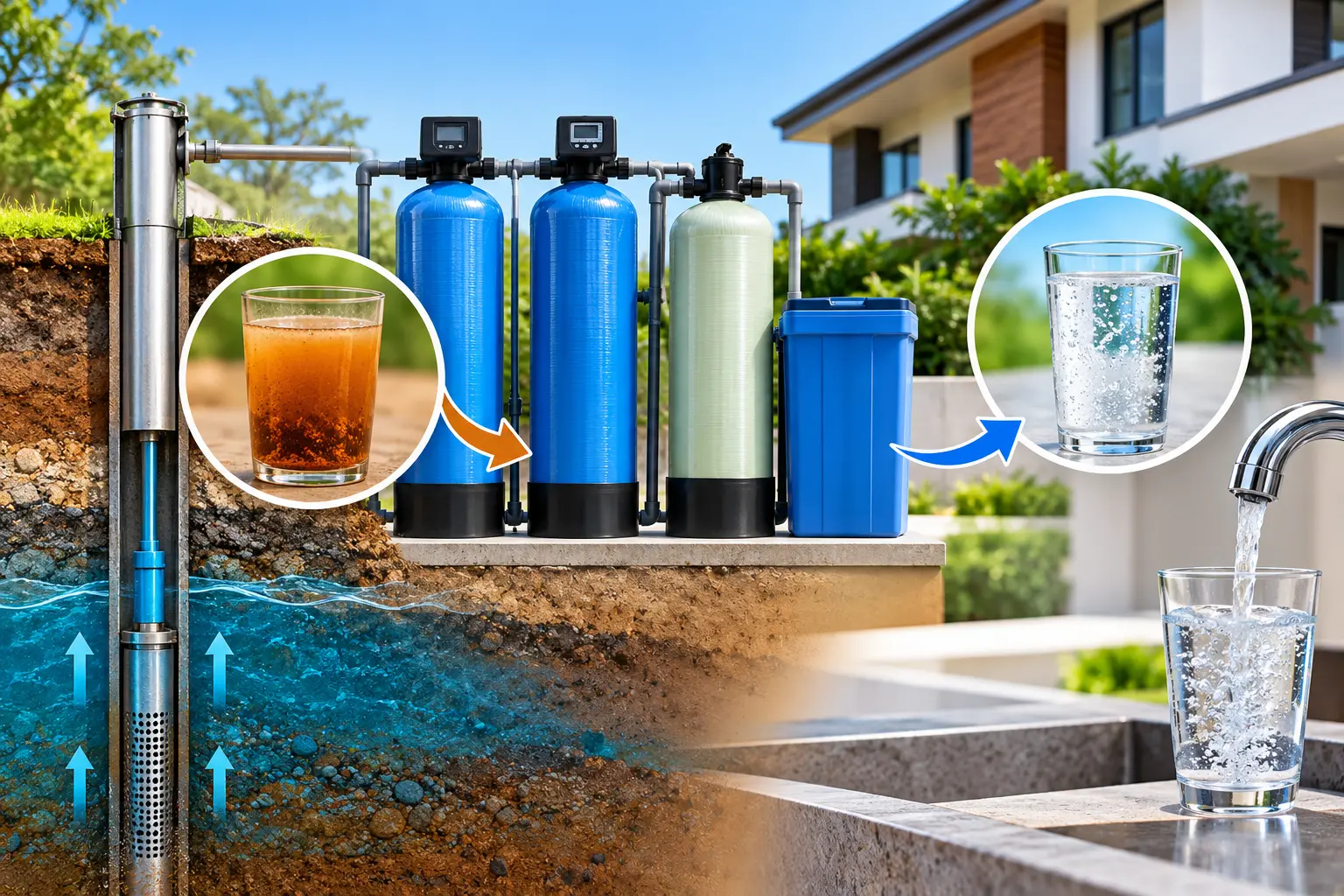
Borewell water is a common water source for independent houses, apartments, commercial buildings and industrial facilities. However, its quality can vary depending on groundwater conditions and the characteristics of the source. One common concern is iron, which may cause yellowish or reddish water, stains on bathroom fixtures, discolouration of laundry and deposits on surfaces.
Choosing the right iron removal system requires more than simply selecting a filter. The system must be suitable for the actual water quality, iron concentration, water consumption and intended application. Nollet RO provides water treatment solutions for residential, commercial and industrial applications.
A proper assessment of the incoming water can help determine the treatment requirements before installing an iron removal system.
Why Does Borewell Water Contain Iron?
Iron can occur naturally in groundwater as water moves through soil and rock formations. Depending on local groundwater conditions, iron may be present in dissolved form or as particles.
When dissolved iron comes into contact with oxygen, it can oxidise and form visible particles. This process may cause water to develop a yellow, orange or reddish appearance.
Common signs associated with iron in borewell water include:
- Yellowish or reddish discolouration of water.
- Rust-coloured stains on bathroom fixtures and toilet bowls.
- Staining on clothes during washing.
- Deposits accumulating in water storage tanks or plumbing.
- Changes in water appearance after exposure to air.
These symptoms can indicate a possible iron-related issue, but appearance alone cannot confirm the iron concentration. Water analysis is necessary to identify actual water quality and determine the appropriate treatment process.
What Should You Consider When Choosing an Iron Removal System?
Selecting a suitable iron removal system begins with understanding the water conditions and the property’s requirements. The following factors are important when evaluating a treatment solution.
1. Iron Concentration in the Water
Iron concentration is one of the most important factors in selecting a treatment system. Different water sources can contain different iron levels, so a system should not be selected based only on visible stains or water colour.
A water test helps establish the iron concentration and provides information needed for treatment planning. The results can help determine whether oxidation, filtration or a combination of treatment processes may be appropriate.
2. Type of Iron Present
Iron may be present in dissolved form or as oxidised particles. These forms behave differently during treatment and can influence the filtration process required.
Dissolved iron may need to be oxidised before it can be effectively removed through suitable filtration media. Particulate iron may require filtration designed to capture suspended material.
3. Water Consumption and Flow Requirements
A household and an industrial facility do not necessarily have the same water treatment requirements. Design a system around the required water volume and expected operating flow.
- Number of people using the water in a residence.
- Water demand in apartment buildings or gated communities.
- Daily water requirements of a commercial establishment.
- Process-water demand in an industrial facility.
- Available space for installing the treatment equipment.
Evaluating these requirements helps determine the appropriate system configuration.
4. Filtration Media and Treatment Method
Iron removal systems can use different treatment methods and filtration media depending on the water characteristics.
| Treatment Method or Media | Purpose |
|---|---|
| Oxidation | Converts dissolved iron into a form that can be filtered under suitable conditions. |
| Birm Filtration Media | Supports iron removal under appropriate operating conditions. |
| Manganese Greensand | Can support iron removal through oxidation and filtration when properly configured. |
| Mechanical Filtration | Helps retain suspended particles depending on the filter design. |
Not every medium is suitable for every water source. Factors such as pH, dissolved oxygen, iron concentration and other water characteristics can affect treatment performance. Selection should therefore be based on water analysis and operating requirements.
For properties with broader water-quality concerns, explore reverse osmosis and water treatment plant solutions from Nollet RO.
How Does an Iron Removal System Work?
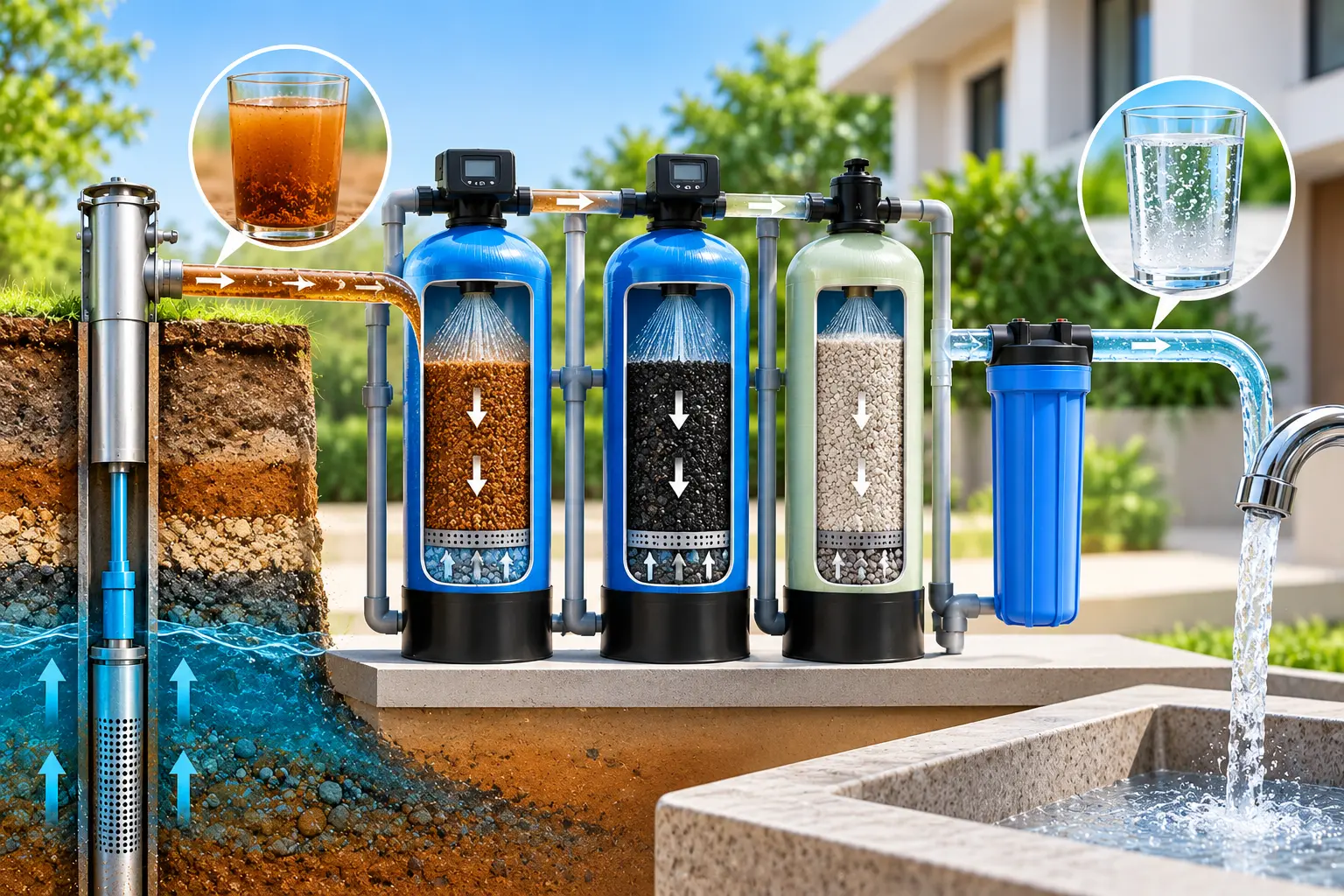
An iron removal system is designed to reduce iron in water through a treatment process selected for the source-water characteristics.
A typical treatment sequence may include the following stages, depending on the system design.
Step 1: Water Assessment
The incoming water is tested to understand its iron concentration and other relevant characteristics.
Step 2: Oxidation, Where Required
Dissolved iron is converted into a form that filtration can capture under suitable operating conditions.
Step 3: Filtration
Suitable media retain iron particles and other targeted impurities from the water.
Step 4: Backwashing, Where Applicable
The filter is cleaned using its designated cycle to remove accumulated material.
Step 5: Treated-Water Assessment
The treated water is evaluated to determine whether the system is meeting the intended treatment requirements.
The exact sequence depends on the treatment technology and water quality. A professionally selected system should match the property’s water demand and borewell characteristics.
Why Is Water Testing Important Before Installation?
Water testing helps establish actual treatment requirements instead of relying on assumptions. While reddish stains can suggest the presence of iron, other factors may also affect the appearance and quality of water.
An assessment may consider:
- Iron concentration.
- Total dissolved solids (TDS).
- Water hardness.
- pH and other relevant parameters, depending on the application.
- Expected water consumption and flow requirements.
TDS and hardness should not be treated as direct measurements of iron. Each parameter provides different information about water quality.
Water analysis is especially important when selecting filtration media, determining the treatment sequence and planning an installation for a residential building, apartment complex or industrial facility.
If hard water is also a concern, a separate whole-house water softener system may be relevant. An iron removal filter and a water softener serve different treatment purposes, so the need for each should be assessed independently.
Iron Removal Systems for Residential, Commercial and Industrial Use
The appropriate iron removal system depends on how the water will be used and how much water must be treated.
Residential Applications
Independent houses and villas may require treatment for borewell water used in bathrooms, laundry and other household applications. System design should account for water quality, household demand and available installation space.
Apartment Buildings and Gated Communities
Apartment associations must consider the shared water supply, building-wide demand and number of users. Treatment capacity should reflect actual consumption patterns and operating requirements.
Commercial and Industrial Applications
Commercial buildings and industrial facilities may have specific requirements for treated-water quantity and quality. The design should consider the intended application, source-water characteristics, flow requirements and operating conditions.
For properties in areas such as Mogappair, Porur, Kundrathur and Avadi, the system should be selected based on the site’s water quality rather than location alone.
For local service information, explore iron removal system installation and service support in Mogappair .
What Maintenance Does an Iron Removal System Require?
Regular maintenance helps keep an iron removal system operating according to its design. Requirements depend on the filtration media, system configuration and incoming water quality.
Key maintenance activities may include:
- Inspecting filtration equipment and associated connections.
- Checking automatic valves and control settings.
- Ensuring backwashing functions correctly where applicable.
- Monitoring changes in treated-water quality.
- Arranging servicing when the system shows reduced performance.
A system that is not maintained appropriately may experience media fouling, increased pressure drop or reduced treatment performance. Following the equipment manufacturer’s maintenance instructions and arranging professional servicing when necessary can help identify operating issues.
For additional water treatment requirements, visit Nollet RO’s water treatment solutions .
What Information Should You Prepare Before Installation?
To help the technical team understand your requirements, prepare the following information where available.
- Type of property and intended water application.
- Source of feed water.
- Available iron concentration test results.
- Recent feed-water TDS, hardness and pH readings, where available.
- Daily water consumption and expected flow requirements.
- Previous water treatment equipment or recurring issues.
- Available space for installing the treatment equipment.
These details support a more focused technical discussion. The final system selection should follow a suitable water assessment and review of the property’s requirements.
Frequently Asked Questions
Reddish water can indicate the presence of iron, but colour alone is not conclusive. Water analysis is needed to confirm the cause and measure the iron concentration.
A conventional sediment filter primarily captures suspended particles. Dissolved iron may require an appropriate treatment process, such as oxidation followed by filtration, depending on water quality.
No. Their suitability depends on water chemistry, operating conditions and system configuration. Water testing should guide the selection of filtration media.
A building-wide system may be suitable when it is designed for the required flow, water demand and incoming water quality. A site assessment helps establish the necessary configuration.
Yes. Testing helps identify the relevant water-quality parameters and supports the selection of a suitable treatment process for the borewell.
Choose the Right Iron Removal System with Nollet RO
Choosing an iron removal system for borewell water starts with understanding the water itself. Iron concentration, the form of iron present, filtration media, water demand and maintenance requirements all influence the appropriate system design.
Nollet RO offers water treatment solutions for residential, commercial and industrial applications. Contact the team to discuss your borewell water concerns and determine the next steps for an appropriate iron removal solution.
Speak with Nollet RO about your water quality, treatment requirements and suitable system options.
Call Nollet RO: +91 96770 50885
Book an on-site water assessment to help identify your water-quality requirements and suitable treatment options.