
RO Membrane Fouling: Causes, Types, and Prevention Methods
Published: August 31, 2026 | 8 Min Read
RO Membrane Fouling: Causes, Types, and Prevention Methods
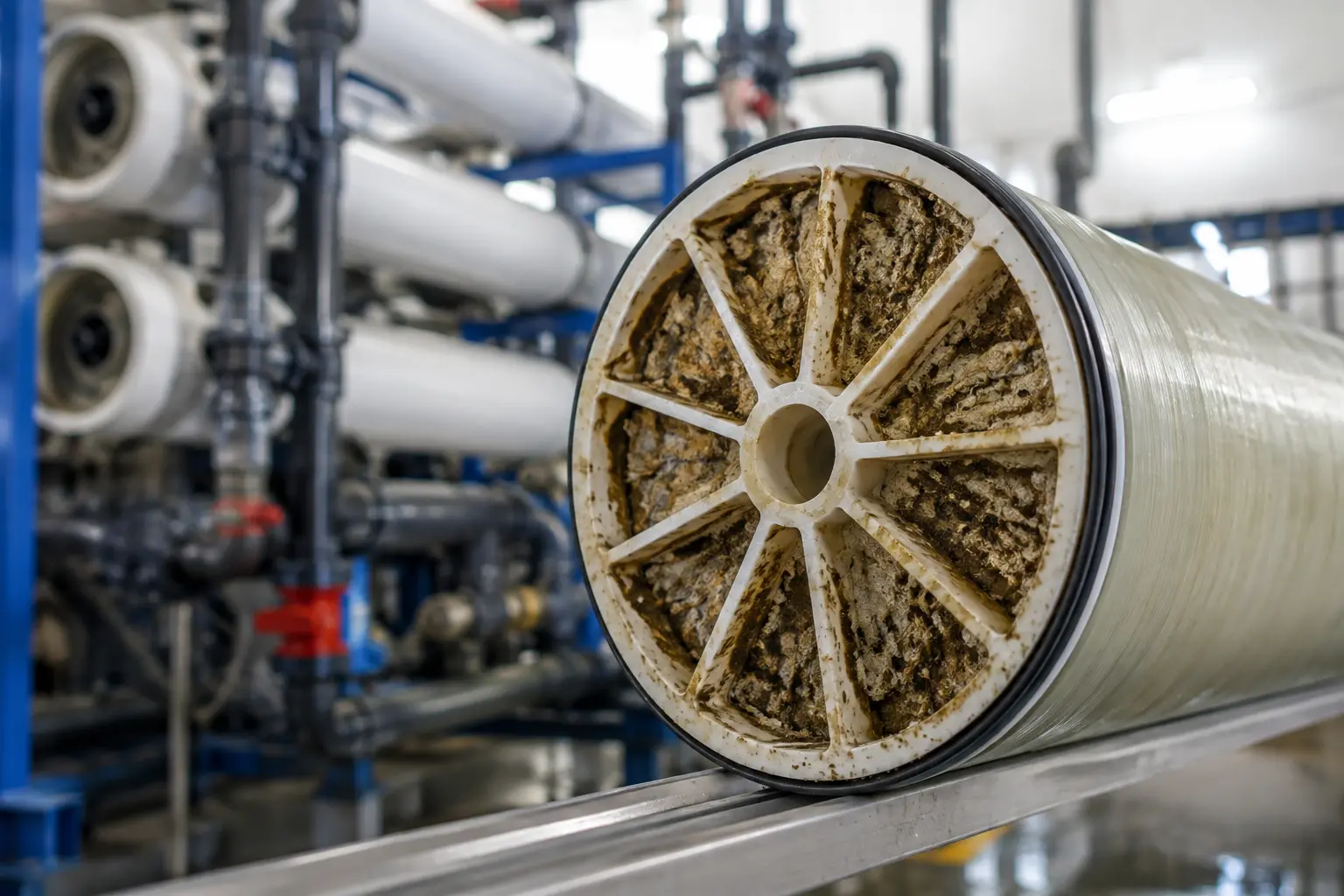
Nollet RO has spent years maintaining reverse osmosis systems right here in Chennai, and if there is one complaint that comes up more than any other, it is fouled membranes quietly eating into output and pressure.
Ask anyone running an RO plant in Porur or nearby industrial belts, and they will tell you the same thing. The membrane looks fine from outside, yet the plant is working twice as hard for half the water, power bills climb, and permeate quality starts drifting without warning.
This guide breaks down why RO membrane fouling happens, the different forms it takes, and what actually stops it before repairs get expensive.
When Clean Water Starts Fighting Back
Every membrane rejects more than just salts. Minerals, microbes, and fine particles that the feed water carries in eventually settle on the membrane surface instead of passing through.
Over weeks, this buildup thickens into a layer that blocks flow and forces the system to push harder for the same output. That extra strain shows up first as rising energy costs, then as reduced permeate quality, and finally as permanent membrane damage if it goes unchecked.
Most plant owners only notice once one of these stages is already well underway, which is why understanding the early signs matters as much as understanding the causes.
Four Ways Membranes Get Clogged
Scaling: When Minerals Turn Solid
Calcium, magnesium, and silica stay dissolved in water until concentration limits are crossed inside the membrane. Past that point, they crystallise directly onto the surface.
Scaling is common in areas with hard borewell water and gets worse whenever recovery rates are pushed too high without proper antiscalant dosing.
Biofouling: The Silent Bacterial Takeover
Bacteria that survive pretreatment find the membrane surface an ideal place to multiply. Biofouling builds a slimy film that traps more organisms and nutrients over time.
By the time it is visible in flow readings, the colony is usually well established.
Colloidal Fouling: Fine Particles, Big Problems
Silt, clay, and iron particles too small for standard pretreatment filters slip through and accumulate at the membrane surface.
Colloidal fouling tends to spike right after heavy rain or when a borewell source runs slightly turbid.
Organic Fouling
Natural organic matter, oils, and humic substances coat the membrane in a way that resists normal backwashing.
It is less common than the other three but often shows up together with biofouling, making both harder to reverse once established.
The Numbers That Warn You First
Membrane differential pressure is the earliest and most reliable indicator of trouble. As fouling builds up, the pressure drop across the membrane element rises even though feed pressure and flow may look unchanged on the surface. A steady climb in differential pressure, paired with a drop in permeate flow or a rise in salt passage, almost always points to fouling starting well before anyone notices reduced output at the tap.
Keeping Fouling Off Your Membranes
Membrane fouling prevention starts upstream, not at the membrane itself. Correct pretreatment, whether through multimedia filtration, ultrafiltration, or dosing systems matched to the actual feed water, removes most of the load before it ever reaches the membrane. Skipping this stage to save on upfront cost is one of the most common reasons fouling returns within months of a full cleaning. Every RO plant in Porur or surrounding industrial zone that we service starts with a proper water analysis, because a prevention plan built on guesswork rarely holds up for long.
Scheduled RO membrane cleaning is the second layer of defence. Low pH cleans dissolve mineral scale, while high pH cleans target organic and biological fouling. Running the wrong cleaning chemical at the wrong time can do more harm than good, which is why the type of fouling should be identified before selecting a cleaning procedure.For an industrial RO membrane system, keeping spare cleaning chemicals, replacement cartridges, and membrane elements on hand shortens downtime considerably when a cleaning cycle is due.
Frequently Asked Questions
Most systems need cleaning every three to twelve months, depending on feed water quality and how fast differential pressure rises.
Early-stage fouling usually responds well to cleaning. Advanced scaling or biofouling often leaves permanent capacity loss.
Track differential pressure and normalised permeate flow weekly. A steady shift in either reading is an early warning that fouling may be developing.
Yes. Most fouling incidents trace back to weak or skipped pretreatment rather than the membrane itself being defective. Effective pretreatment removes much of the fouling load before it reaches the membrane.
Protecting the Membrane Protects the Plant
RO membrane fouling is rarely sudden. It builds quietly through scaling, biofouling, colloidal buildup, or organic residue until pressure readings and output finally force the issue.Catching it early through proper pretreatment, timely cleaning, and regular monitoring saves far more than a reactive fix ever will. Whether you manage a compact unit or a full-scale RO plant in Porur, the principle stays the same: protect the membrane and the rest of the plant runs the way it was designed to.If your plant is already showing signs of falling performance, Nollet RO can inspect your system and get it back to full capacity before the damage becomes permanent.